
The Beatle Connection
It's never too late to learn about missed opportunities

After the British Invasion in the 1960s, South Texas was teeming with musicians and bands. The Beatles ignited a spark in the young minds of Corpus Christi's kids, revolutionizing the music scene. Everyone aspired to join a band or become a fan. Recognizing the demand, the clubs began organizing all-ages shows. In Corpus Christi, even teenagers could enjoy live music, and The Beach Club on Ocean Drive became a popular venue, attracting large crowds. Ray High School hosted sock hops, while the City arranged outdoor performances by teen bands between the Coliseum and its annex. The Carousel Lounge at Six Points offered Sunday sessions from noon until 6:00 PM, showcasing numerous bands. Most of the audience eagerly awaited their turn on stage at the Carousel. I was one of those kids waiting for my chance to perform.
One of my earliest bands, The Riptides (later known as The Zakary Thaks), frequently played at the Carousel. Chris Gerniottis, John Lopez, and I would tear it up with our surf tunes. As The Buckle, I collaborated with Sam Neely, Larry McGill, and Paul White. Sam later achieved national recognition, and Paul had the opportunity to perform with the blues legend Luther Allison. During one of those performances, I first spotted Roy Cox on stage, inexplicably sporting an English accent. Sundays at the Carousel featured various acts, including The Liberty Bell and Corpus Christi's first rebellious group, The Bad Seeds. If lucky, you might sneak into a nighttime show at the Carousel and catch performances by Roy Head, Tony Joe White, or Question Mark and the Mysterians. Talent permeated the air, and I felt fortunate to be a part of this burgeoning music scene.
The local record labels took notice of the abundance of talent in South Texas. Jack Salyers and Carl Becker established J-Beck Records in Corpus Christi, Texas. Carl showed particular interest in The Zakary Thaks and The Bad Seeds. The label also signed other artists such as Tony Joe White, Mike Taylor (Michael), Sam Neely, and The Liberty Bell. J-Beck Records released 45s by The Bad Seeds and The Thaks in 1966, strategically positioning themselves to capitalize on the South Texas music explosion.
Around that time, I left Corpus Christi to join The Bubble Puppy. We signed with International Artists, and within eight months, our song "Hot Smoke and Sassafras" soared to #14 on the Billboard charts.
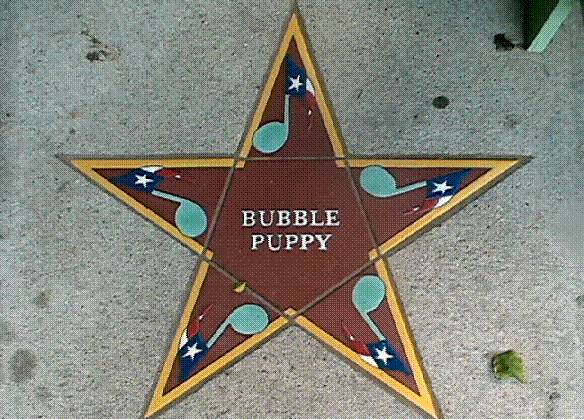
Fun Fact: Our record company, booking agent, and publisher were all owned by International Artists. This arrangement eventually led to what I refer to as the "Great Trifecta"—a triple betrayal of Bubble Puppy.
International Artists failed to deliver our LP, "A Gathering of Promises," in time to capitalize on the success of "Hot Smoke." We were touring with a number-one record, yet our album was nowhere to be found in stores.
The world's largest booking agency, the William Morris Agency, offered to sign The Bubble Puppy and make us "Bigger than The Beatles." However, International Artists declined to hand over the booking rights.
Astonishingly, only a few years ago, I stumbled upon the most significant betrayal of all while reading an article about the South Texas Music Scene in the sixties. It revealed a mind-blowing revelation: "In 1969, Carl Becker from J-Beck Records gathered a collection of 45s from South Texas bands and traveled to the newly established Apple Records in London. He met with George Harrison to discuss releasing these records on Apple. To Becker's surprise, George Harrison was already familiar with 'Hot Smoke and Sassafras' and expressed interest in making it the first non-Beatles record released on Apple Records."
What? A Beatle wanted to release our song on Apple Records? How could I have been unaware of this? Could it be true? Why hadn't we been informed?
The article continued, "Carl Becker returned to the United States and presented George Harrison's proposal to International Artists, who promptly rejected it." Their reasoning was: "We will open a branch of International Artists in London," which, of course, never happened.
This is probably the saddest thing I’ll read all year. Really sorry, David.
Did you not have any legal recourse?